



Why skin cooling is not optional in modern laser treatments
Laser hair removal is fundamentally a thermal procedure. The objective is to generate controlled heat within the hair follicle while preserving the surrounding skin tissue. This delicate balance is what defines both safety and effectiveness. When epidermal temperature rises excessively, discomfort increases and the risk of inflammatory reactions grows.
For this reason, skin cooling is not an accessory feature of advanced laser systems. It is a physiological necessity.
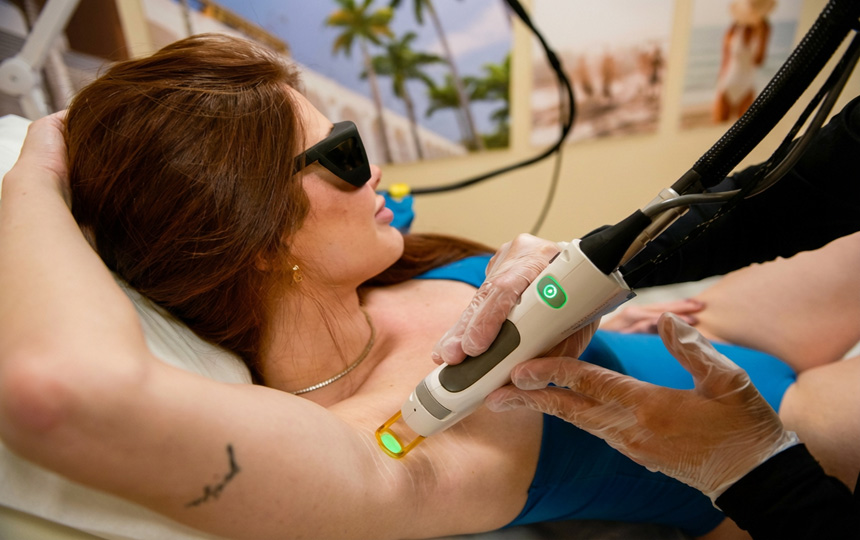
At Riolaser Orlando, cryogenic gas cooling is incorporated into every session as an integrated part of the protocol. The cooling system works in synchrony with the laser pulse, allowing energy to reach the follicle while keeping the epidermis within safe thermal limits.
Understanding how this mechanism works requires looking at skin physiology.
The physiology of heat, pain and epidermal response
The human skin contains thermoreceptors and nociceptors that detect temperature and pain. When laser energy is delivered to the hair follicle, heat spreads outward through surrounding tissue. If this heat reaches superficial nerve endings without regulation, the sensation can intensify significantly.
This is where cryogenic cooling plays a critical role. By rapidly lowering the temperature of the epidermis milliseconds before or after each laser pulse, the system reduces the stimulation of nerve endings. The result is not only improved comfort but also reduced inflammatory response.
Cooling does not weaken the laser’s effectiveness. Instead, it enhances the therapeutic window by protecting the outer skin layer while allowing adequate energy to reach deeper follicular structures.
What cryogenic cooling actually does at the tissue level
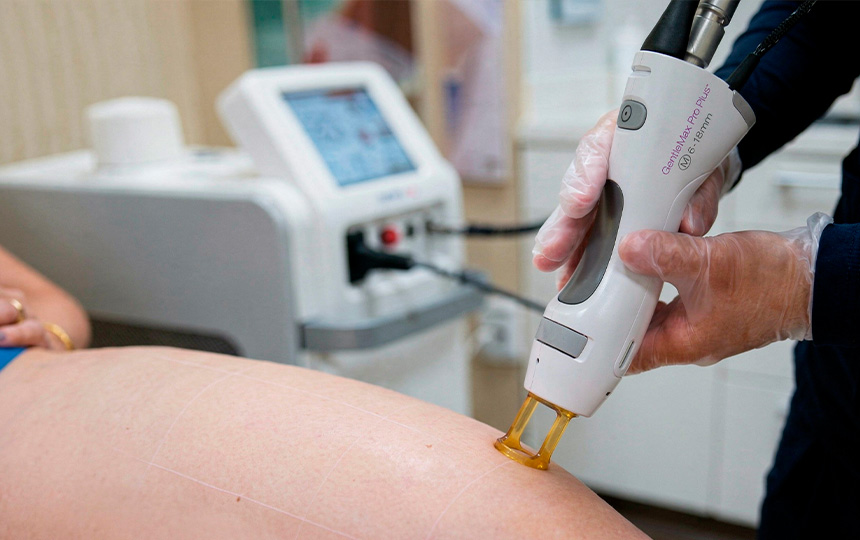
Cryogenic cooling delivers a precisely timed burst of extremely cold gas onto the surface of the skin. This rapid cooling creates a controlled thermal gradient. While the follicle receives heat sufficient for disruption, the epidermis remains shielded from excessive temperature rise.
From a thermodynamic standpoint, this approach improves energy control in three important ways:
- It lowers epidermal surface temperature before heat diffusion occurs
- It reduces the risk of unwanted thermal spread to adjacent tissue
- It allows clinicians to maintain effective fluence levels safely
This controlled interaction is particularly important when treating sensitive or highly pigmented skin.
The relationship between cooling and laser parameters
Laser systems rely on several adjustable variables, including wavelength, pulse duration, and fluence. These parameters must be balanced with skin characteristics and treatment area.
Without proper cooling, practitioners may be forced to lower energy levels to prevent discomfort. Lower energy can reduce follicular damage and compromise long term reduction.
With cryogenic cooling, it becomes possible to operate within optimal therapeutic ranges while preserving epidermal safety. In practical terms, this means the treatment can remain both comfortable and effective at the same time.
Why cryogenic cooling is different from basic cooling methods
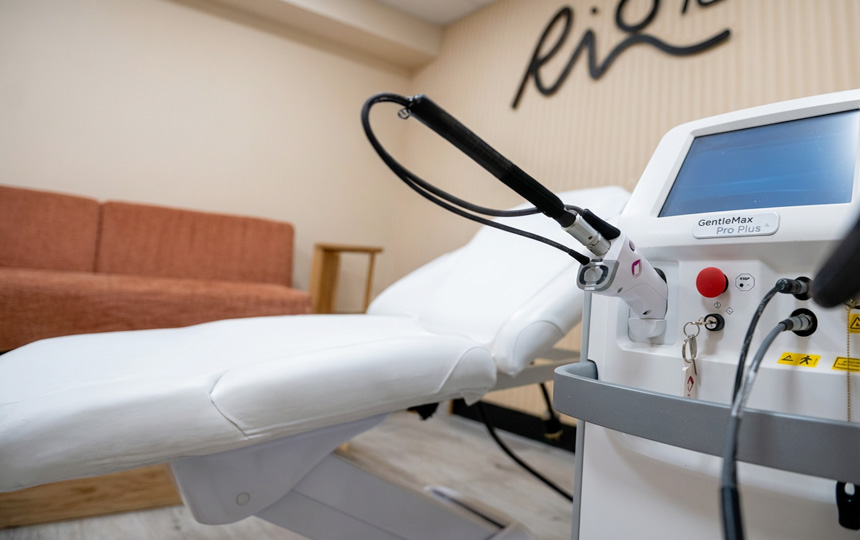
Some systems rely on air flow or chilled contact tips. While these methods can provide surface relief, they do not create the same immediate and targeted thermal protection.
Cryogenic cooling stands apart because it acts within milliseconds and directly precedes the laser pulse. The rapid temperature shift reduces superficial nerve stimulation while preserving deeper energy delivery.
In advanced clinical environments, this level of control is considered standard rather than optional.
Safety benefits for diverse skin tones
Laser hair removal in darker skin tones requires particular attention to epidermal melanin. Because melanin absorbs light energy, surface overheating becomes a greater risk if parameters are not carefully managed.
Cryogenic cooling reduces this risk by shielding the epidermis during energy delivery. The combination of appropriate wavelength selection and effective cooling significantly enhances safety across a wide range of skin types.
This becomes especially important in areas influenced by hormonal activity, where skin sensitivity may be heightened.
Comfort as a clinical advantag
Comfort is often dismissed as secondary to results, yet it directly influences treatment adherence. When sessions are tolerable, clients are more likely to complete the full protocol and maintain appropriate scheduling.
Clinical experience consistently shows that effective cooling reduces the perception of sharp heat sensations and shortens recovery time. Mild redness may still occur, but it typically resolves quickly due to controlled thermal exposure.
In this way, comfort and safety become inseparable components of successful long term outcomes.
The broader impact on treatment results
Although cooling does not directly damage the follicle, it indirectly improves overall results. By stabilizing epidermal temperature, it allows for consistent parameter application from session to session.
This consistency leads to:
- More predictable cumulative hair reduction
- Reduced post treatment inflammation
- Improved overall patient satisfaction
When thermal control is precise, the biological response becomes more reliable.
Why Riolaser integrates cryogenic cooling into every protocol
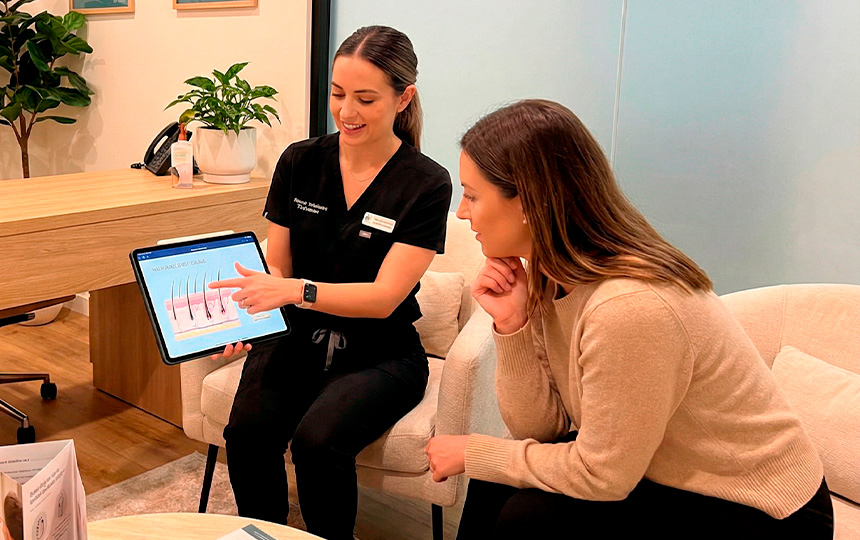
At Riolaser Orlando, cryogenic cooling is not treated as a luxury enhancement. It is incorporated as a protective standard designed to elevate both safety and patient experience.
The integration of advanced laser systems with synchronized cooling reflects a medically grounded approach. Technology, physiology, and protocol are aligned to ensure that energy is delivered where it is needed and controlled where it must be limited.
This dual focus on protection and performance defines modern laser hair removal.
Final considerations on skin cooling technology
Laser hair removal is ultimately a balance between heat and control. Cryogenic skin cooling strengthens that balance by protecting the epidermis, reducing pain sensitivity, and expanding the therapeutic window.
In advanced clinical settings, cooling is not an afterthought. It is part of the engineering that makes effective hair reduction possible without compromising skin integrity.
When technology and physiology are respected equally, treatment outcomes become safer, more comfortable, and more consistent.